Vocal/piano duet recording session#
Recording Session Information#
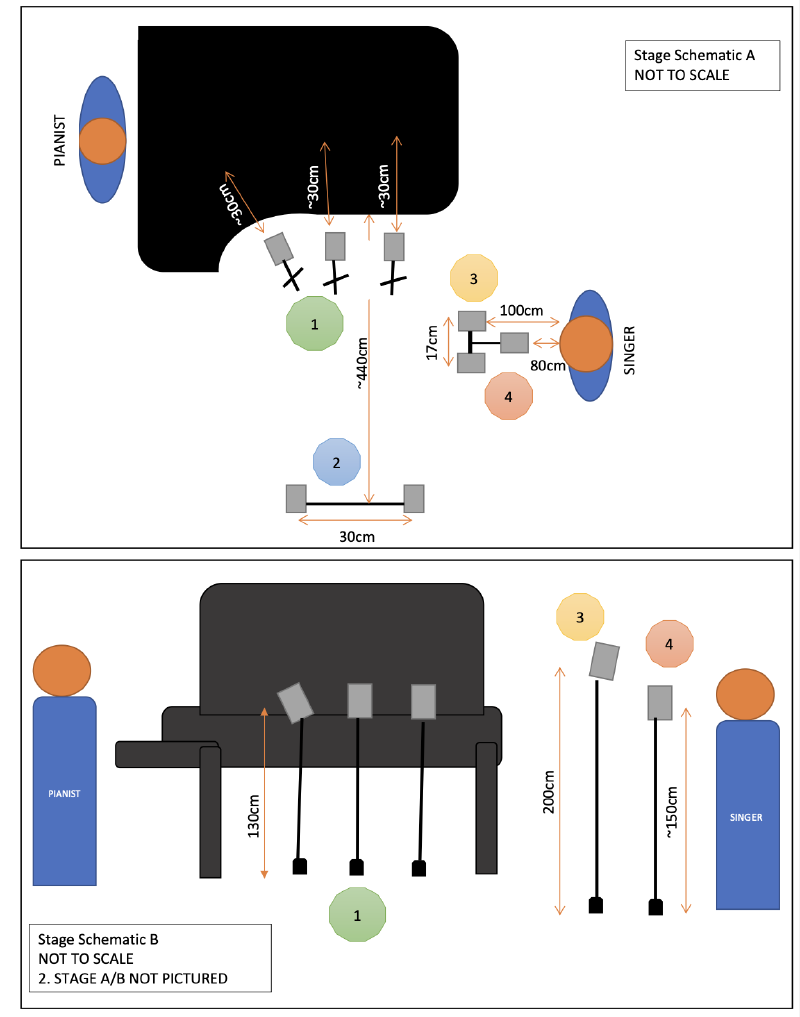
The music was performed by soprano singer Jessica Baldry and pianist Toby Baker. They performed Me Llaman la primorosa from Rossini’s El Barbero de Sevilla, and Faure’s Les Roses d’Ispahan. The recording session took place in the Elgar Concert Hall and ran for 40:44. It was recorded on a Zoom F8, using an LCR mic setup for the piano, a stage A/B pair for reverb, and an A/B pair and spot mic for the vocals.
Microphones#
The microphones used were as follows: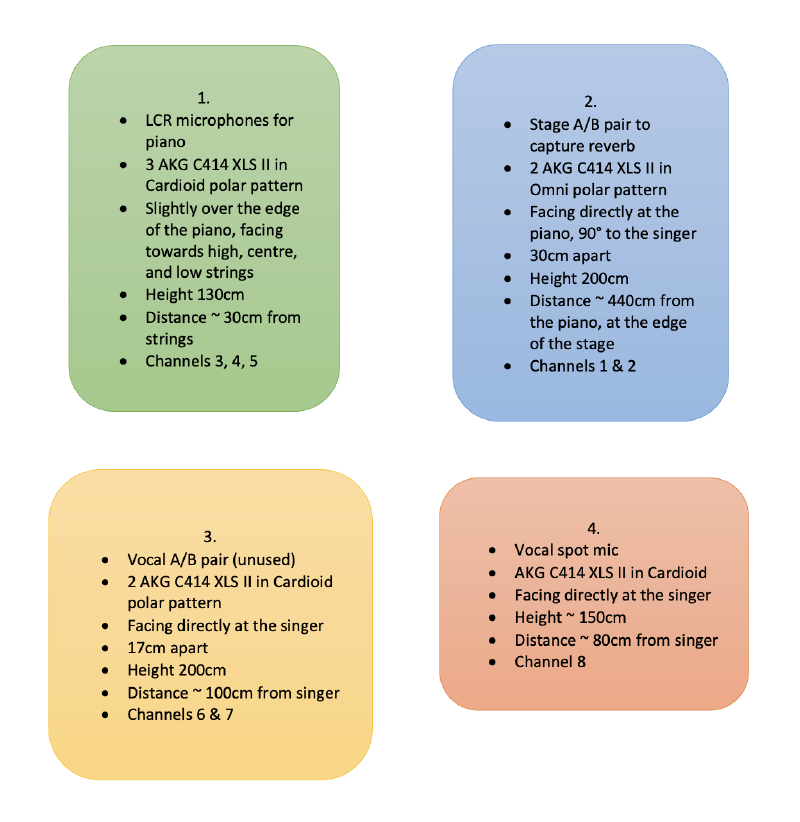
The AKG C414 XLS II capsules are quite hard to align due to the shape of the protective mesh, and its footprint can be quite large, but it makes up for these shortcomings by being very versatile because of its alterable pickup pattern, allowing it to be used in many different setups.
Edit Locations#
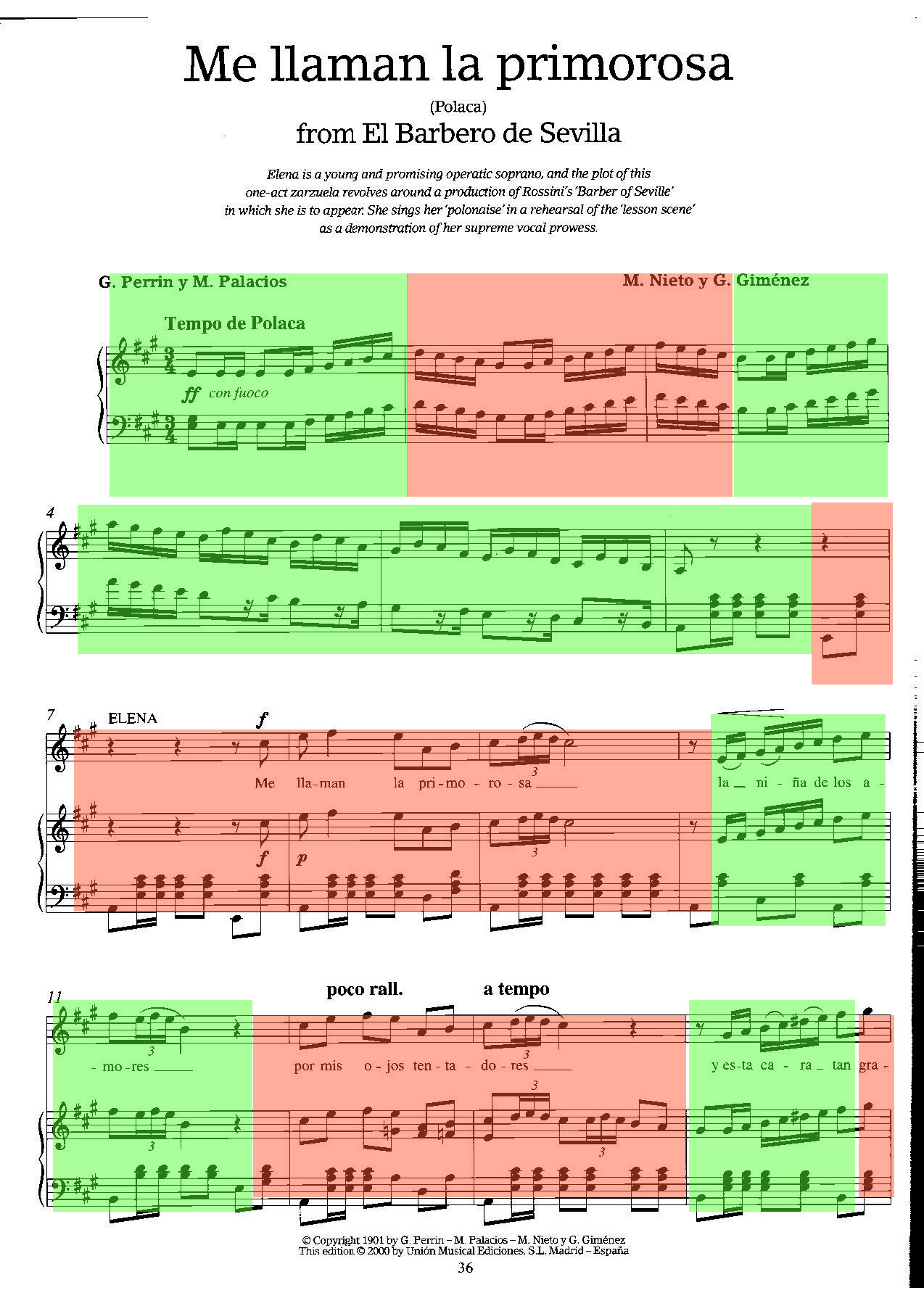
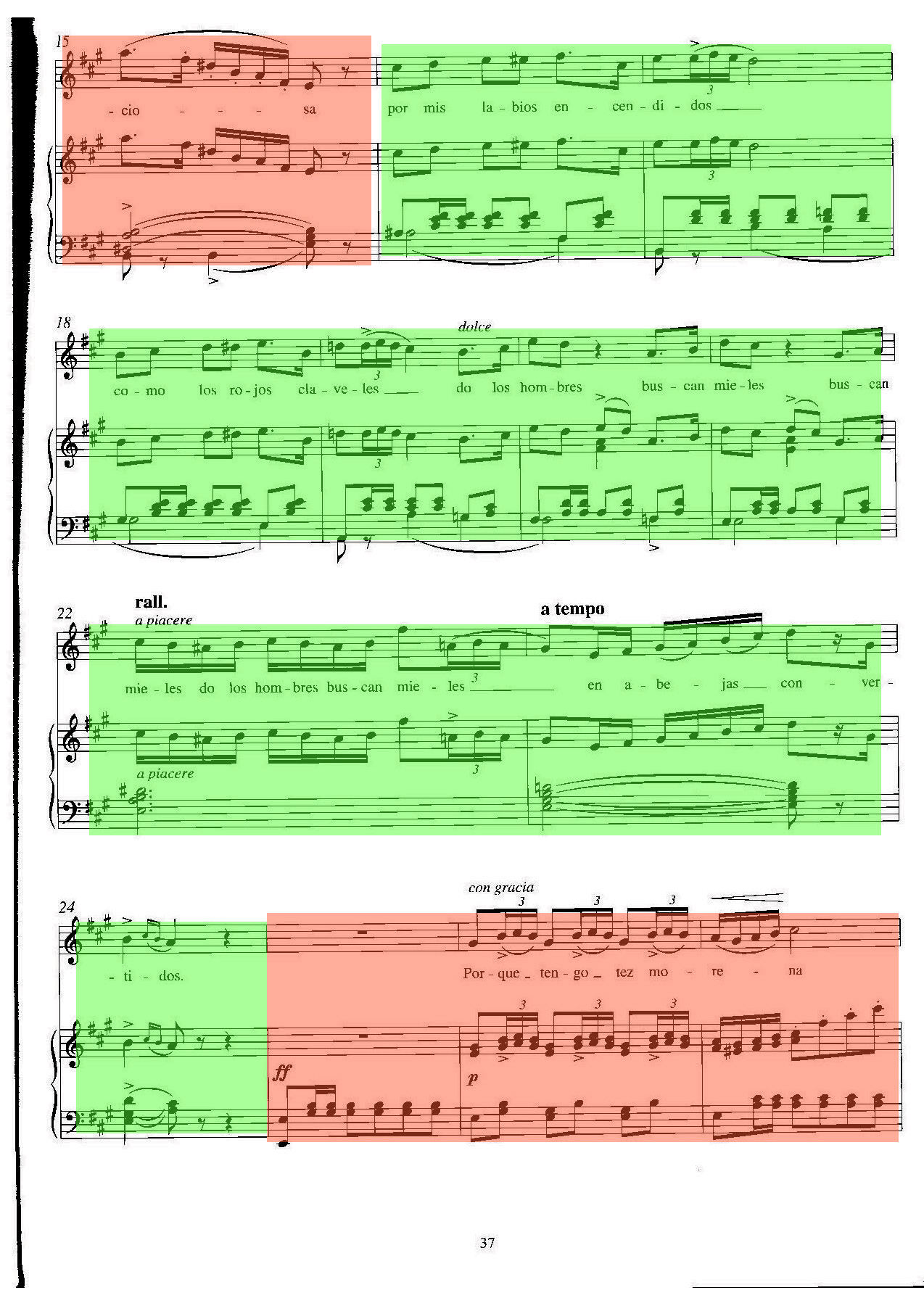
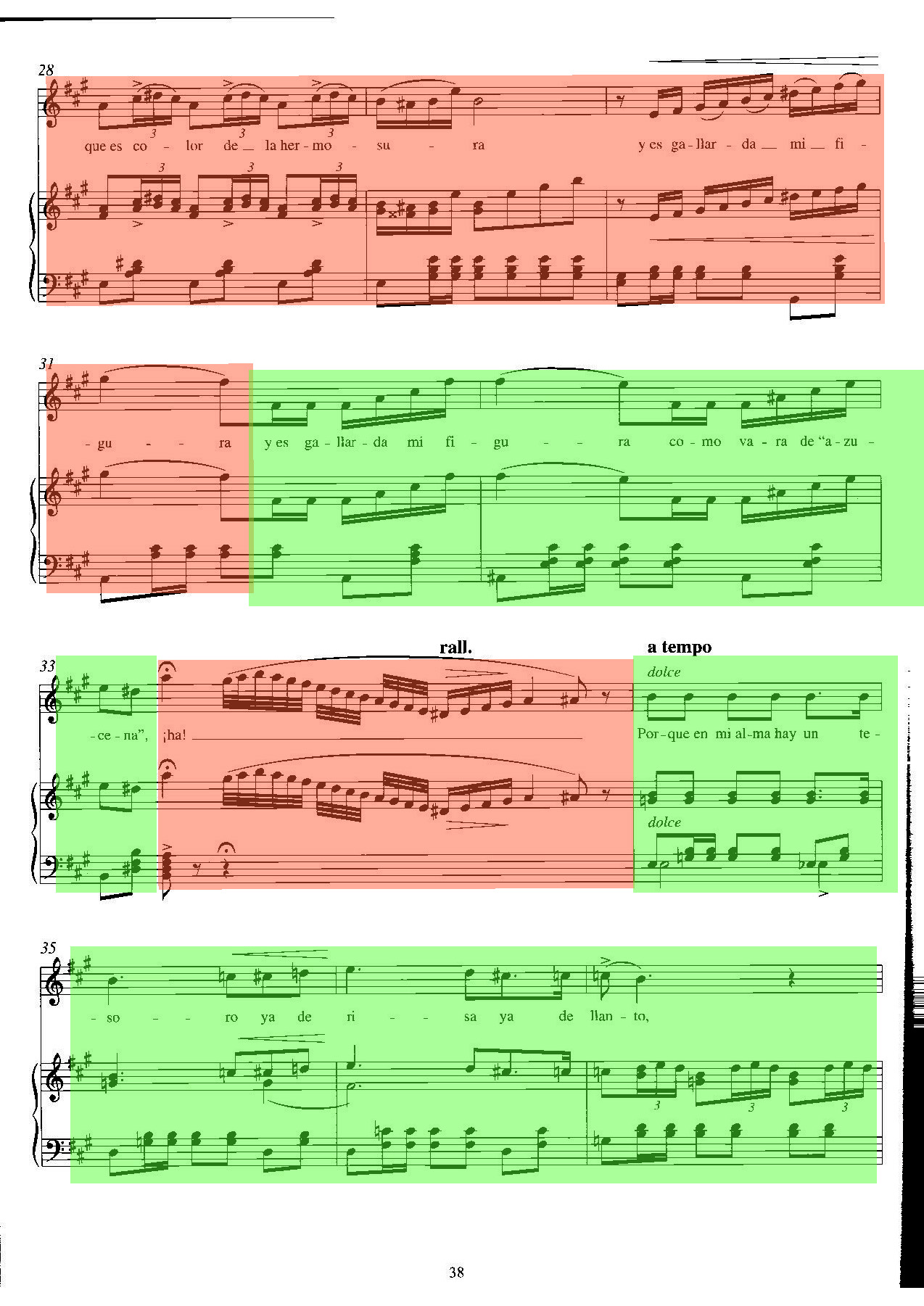
Below is a table for each piece detailing the edit locations for the final comp.
Me Llaman la primorosa edit points
| Edit # | Location in Score | Start Time (Wav) | Start Time (Source) | Notes |
|---|---|---|---|---|
| 1 | Bar 1.1 | 0:00.980 | 5:06.236 | |
| 2 | Bar 2.1 | 0:02.954 | 0:31.395 | |
| 3 | Bar 3.2 | 0:05.425 | 5:10.770 | |
| 4 | Bar 6.3 | 0:10.663 | 36:31.848 | |
| 5 | Bar 10.1.5 | 0:17.152 | 0:45.466 | |
| 6 | Bar 11.3.5 | 0:20.048 | 5:25.690 | |
| 7 | Bar 14.1 | 0:23.831 | 36:44.998 | |
| 8 | Bar 14.3.5 | 0:25.260 | 5:30.957 | |
| 9 | Bar 16.1 | 0:29.602 | 0:57.613 | |
| 10 | Bar 23.1 | 0:49.528 | 15:14.722 | |
| 11 | Bar 31.2.5 | 1:01.260 | 37:21.748 | |
| 12 | Bar 33.2 | 1:05.305 | 15:30.442 | |
| 13 | Bar 34.1 | 1:13.647 | 37:35.434 | |
| 14 | Bar 38.1 | 1:21.164 | 1:48.820 | |
| 15 | Bar 40.2 | 1:26.201 | 37:48.066 | |
| 16 | Bar 41.3 | 1:28.874 | 1:56.486 | |
| 17 | Bar 42.1.5 | 1:29.954 | 33:22.424 | |
| 18 | Bar 46.1.5 | 1:37.024 | 16:02.496 | |
| 19 | Bar 47.1 | 1:38.464 | 33:30.999 | |
| 20 | Bar 47.2 | 1:39.113 | 16:04.610 | |
| 21 | Bar 49.1 | 1:42.207 | 6:48.284 | |
| 22 | Bar 50.2 | 1:45.401 | 38:06.386 | |
| 23 | Bar 56.2.5 | 2:05.076 | 33:56.417 | 2nd ad-lib scale |
| 24 | Bar 56.3.5 | 2:10.706 | 38:32.682 | |
| 25 | Bar 63.1 | 2:22.001 | 16:48.305 | |
| 26 | Bar 65.1 | 2:27.999 | 38:49.745 | |
| 27 | Bar 79.1.5 | 2:57.272 | 13:23.830 | |
| 28 | Bar 81.1 | 3:00.614 | 39:22.230 | |
| 29 | Bar 85.1 | 3:07.575 | 12:36.254 | |
| 30 | Bar 87.1.5 | 3:11.861 | 35:02.932 | |
| 31 | Bar 88.1 | 3:13.356 | 39:34.652 | |
| 32 | Bar 89.1 | 3:15.139 | 35:06.229 | |
| 33 | Bar 90.3.5 | 3:18.315 | 39:39.646 | |
| 34 | Bar 92.1 | 3:21.044 | 35:11.982 | 1st ad-lib scale |
| 35 | Bar 92 | 3:24.926 | 39:47.103 | 2nd ad-lib scale |
| 36 | Bar 92 | 3:28.731 | 35:19.727 | 3rd ad-lib scale |
| 37 | Bar 92.3.5 | 3:38.165 | 4:07.207 | |
| 38 | Bar 93.1 | 3:39.219 | 8:48.184 |
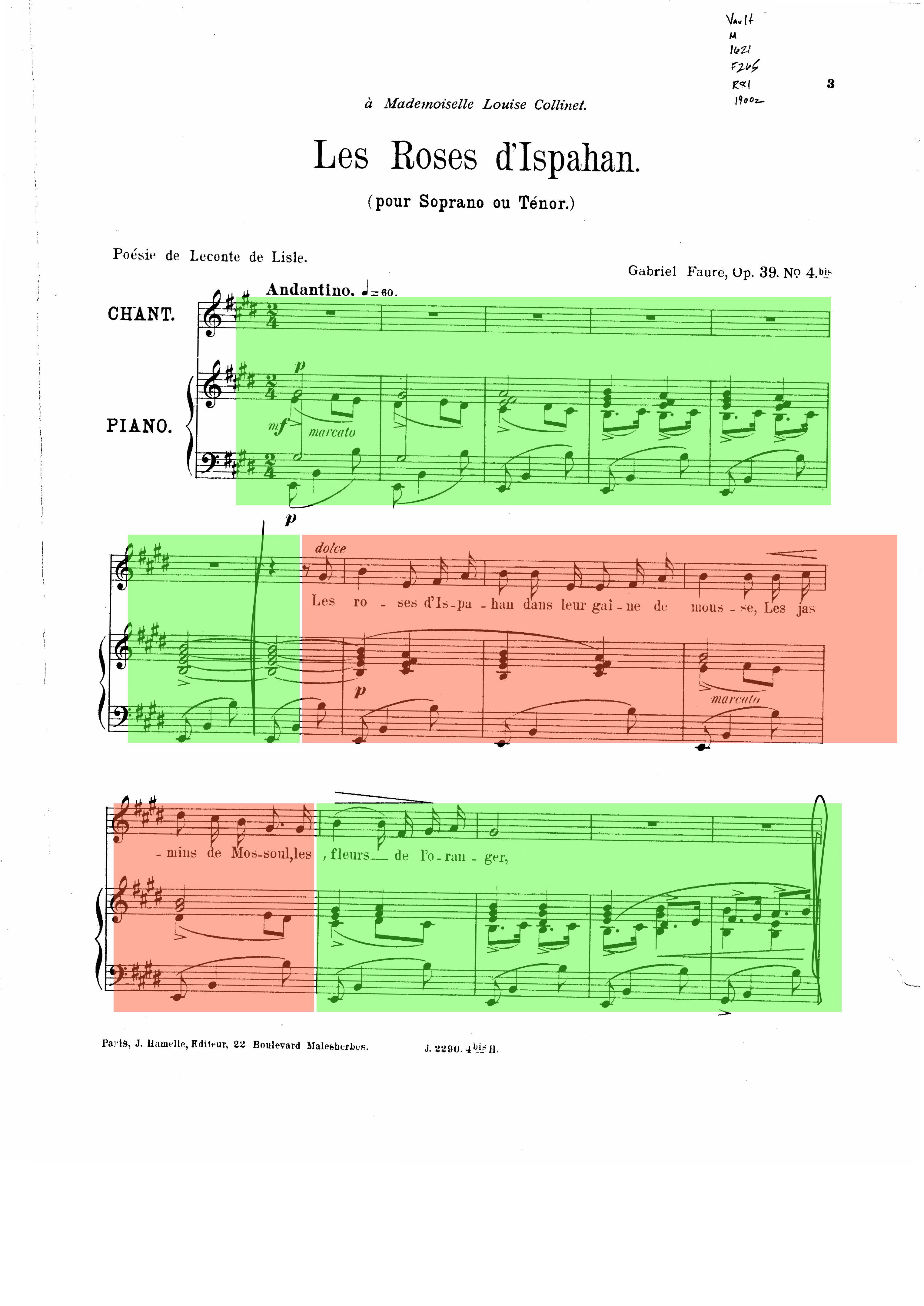
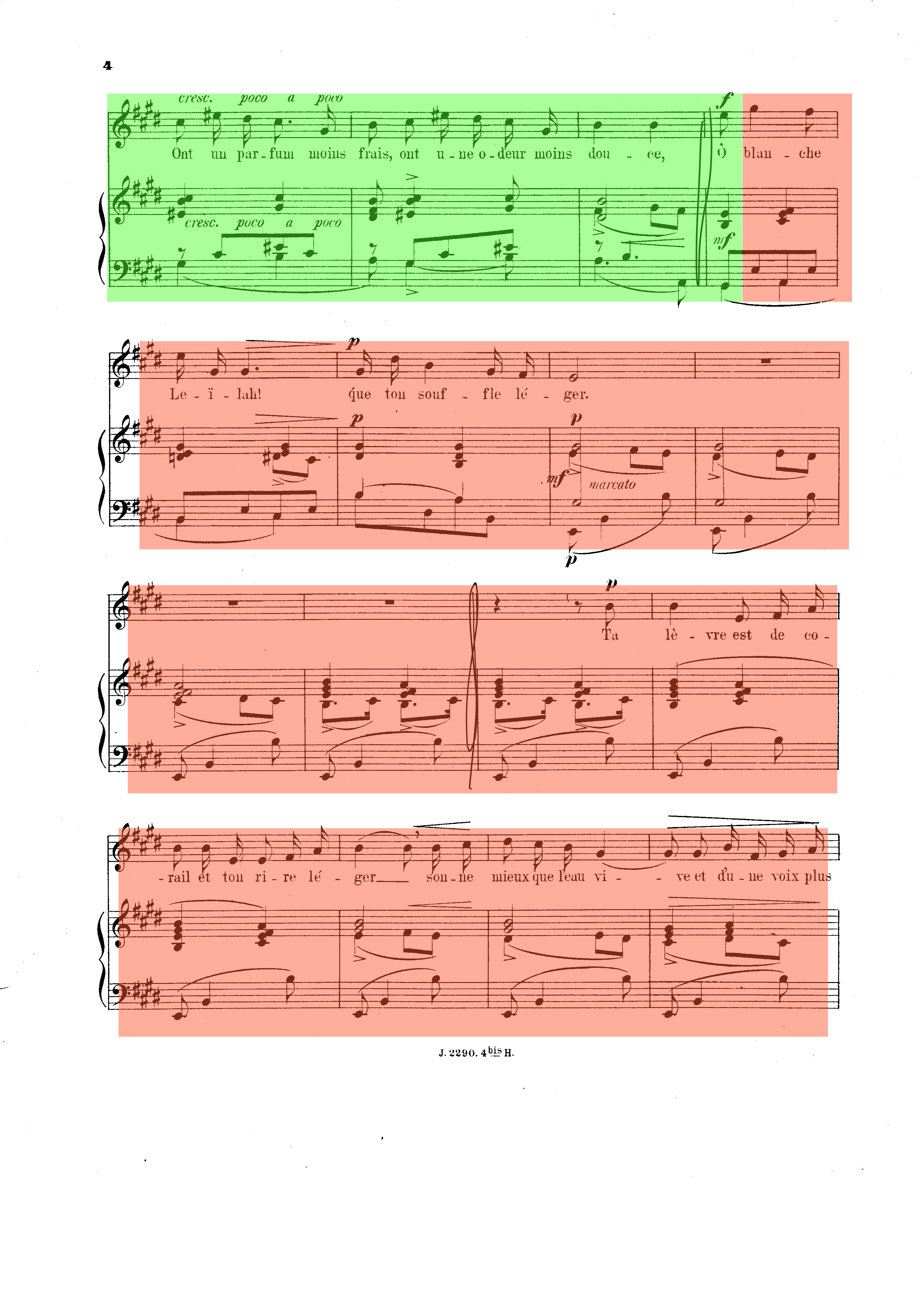
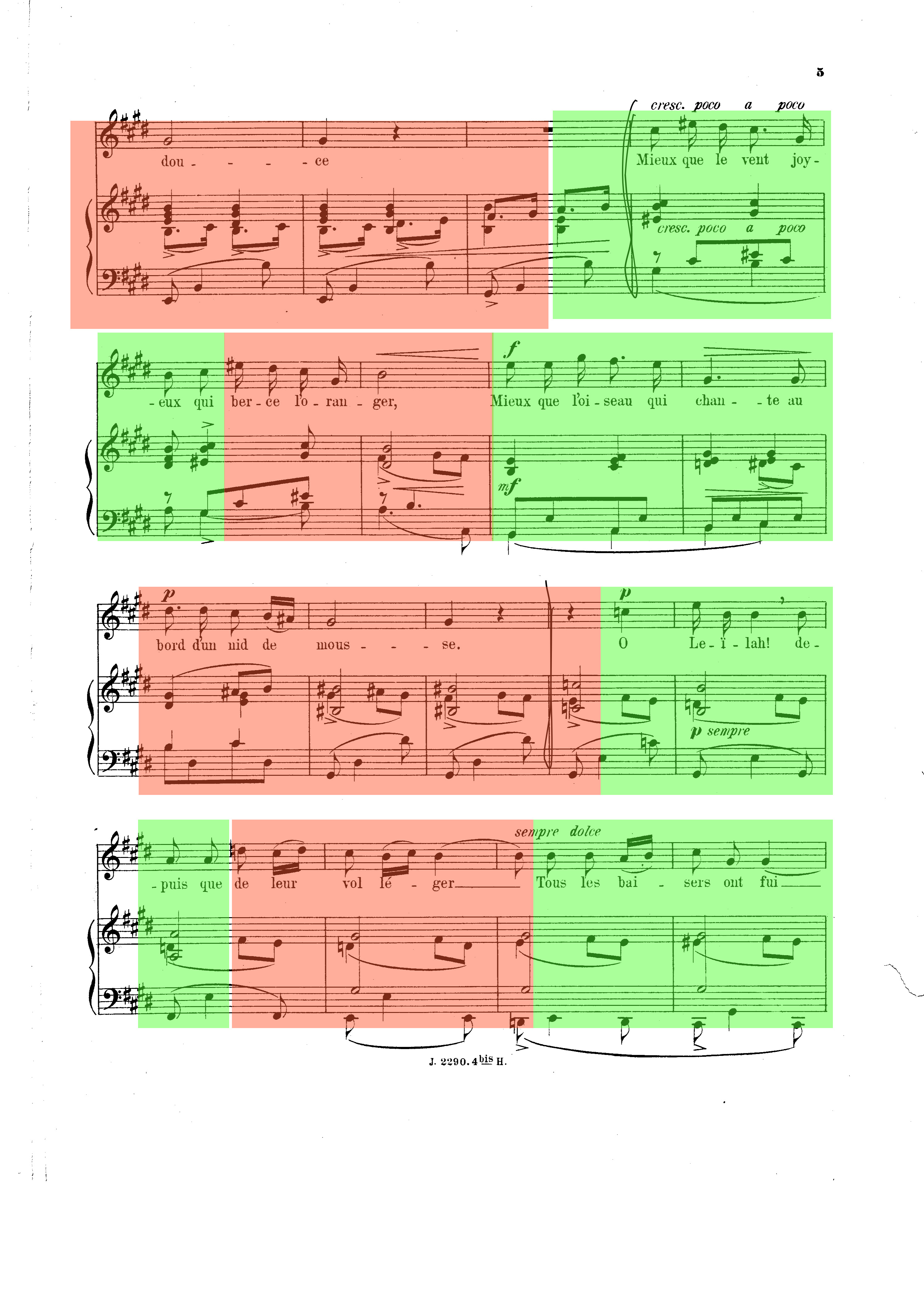
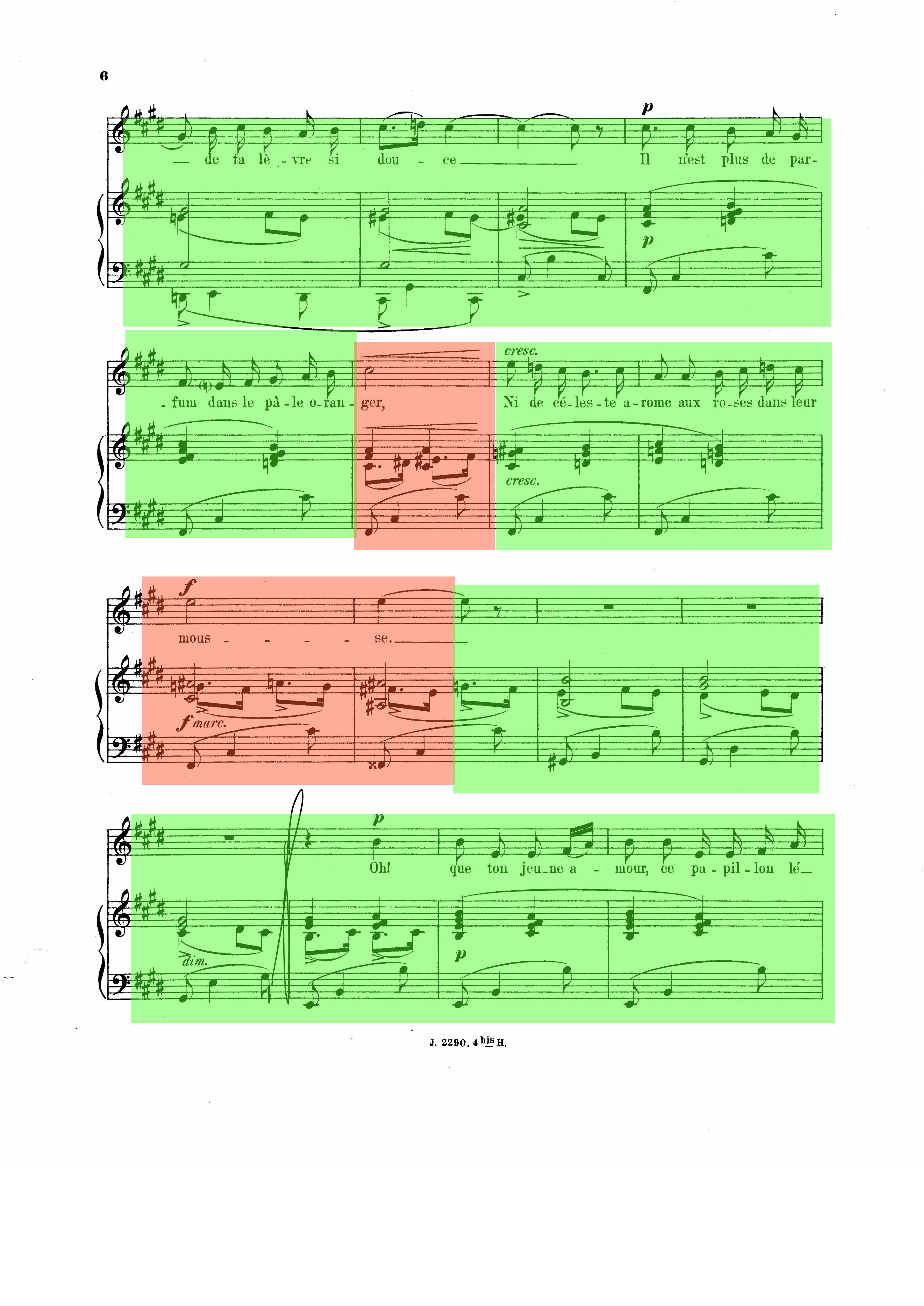
Les Roses d’Ispahan edit points
| Edit # | Location in Score | Start Time (Wav) | Start Time (Source) |
|---|---|---|---|
| 1 | Bar 1.1 | 4:04.451 | 22:26.119 |
| 2 | Bar 7.2.5 | 4:18.538 | 19:14.899 |
| 3 | Bar 12.1 | 4:27.447 | 27:00.163 |
| 4 | Bar 19.1.5 | 4:40.946 | 19:38.093 |
| 5 | Bar 34.2 | 5:11.677 | 23:33.963 |
| 6 | Bar 36.2 | 5:15.391 | 27:46.407 |
| 7 | Bar 38.1 | 5:18.234 | 23:41.159 |
| 8 | Bar 40.1 | 5:22.161 | 27:53.095 |
| 9 | Bar 43.2 | 5:28.813 | 20:26.538 |
| 10 | Bar 45.2 | 5:32.754 | 23:55.947 |
| 11 | Bar 47.1.5 | 5:36.115 | 28:06.785 |
| 12 | Bar 54.1 | 5:49.216 | 29:57.027 |
| 13 | Bar 55.1 | 5:51.060 | 24:14.929 |
| 14 | Bar 57.1 | 5:54.940 | 20:53.591 |
| 15 | Bar 58.2 | 5:58.138 | 24:21.589 |
| 16 | Bar 65.1.5 | 6:11.631 | 30:18.297 |
| 17 | Bar 66.2 | 6:13.432 | 24:36.984 |
| 18 | Bar 68.1 | 6:16.280 | 28:46.014 |
| 19 | Bar 71.2 | 6:22.629 | 24:46.222 |
| 20 | Bar 73.1 | 6:26.122 | 30:32.135 |
| 21 | Bar 74.1 | 6:28.068 | 28:57.173 |
| 22 | Bar 75.1 | 6:30.082 | 30:36.044 |
| 23 | Bar 76.1 | 6:32.606 | 29:01.785 |
| 24 | Bar 81.1 | 6:43.209 | 21:41.675 |
Annotated scores#
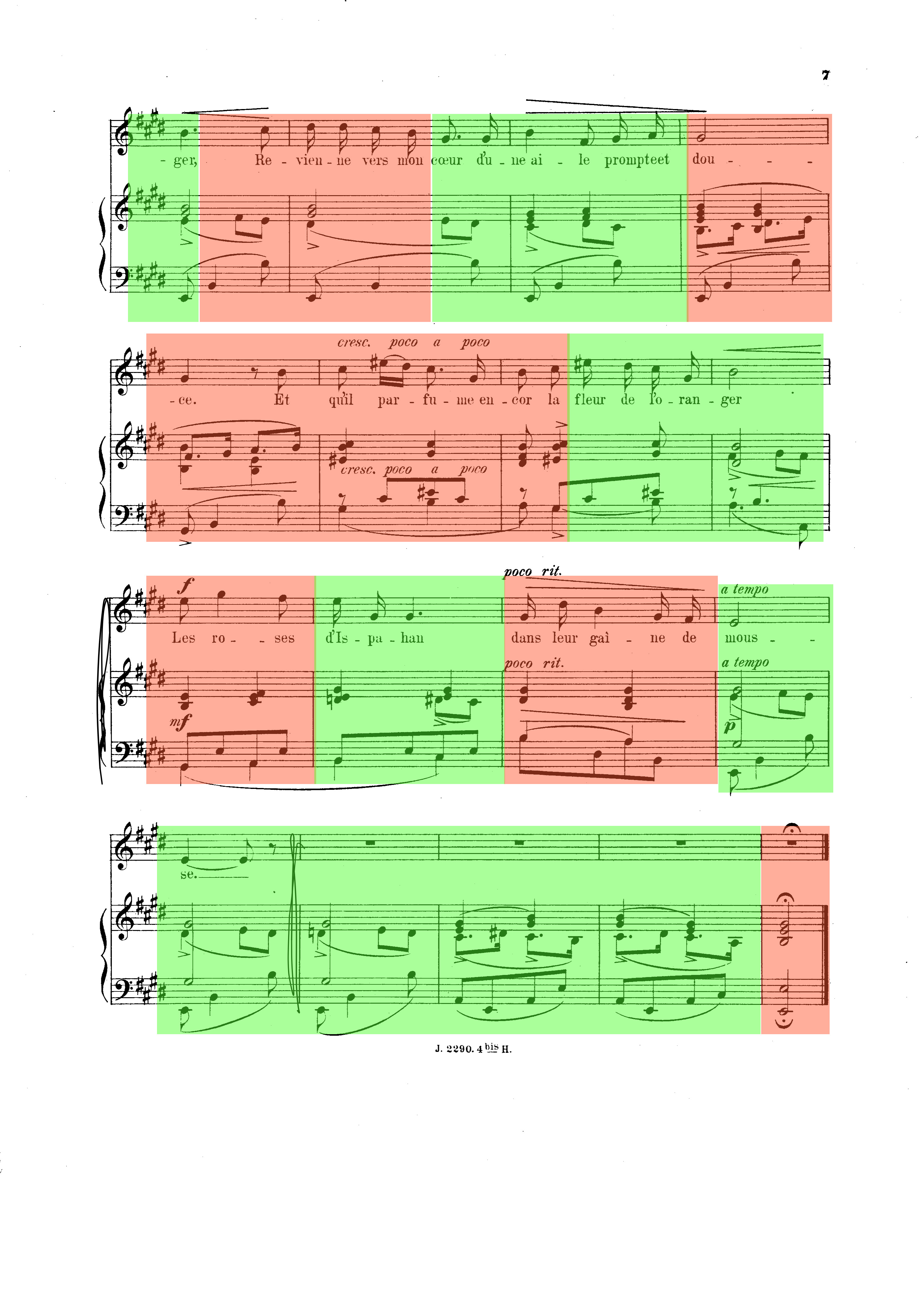
Below are copies of the scores for each piece, annotated with the respective edit points.
Me Llaman la primorosa annotated score
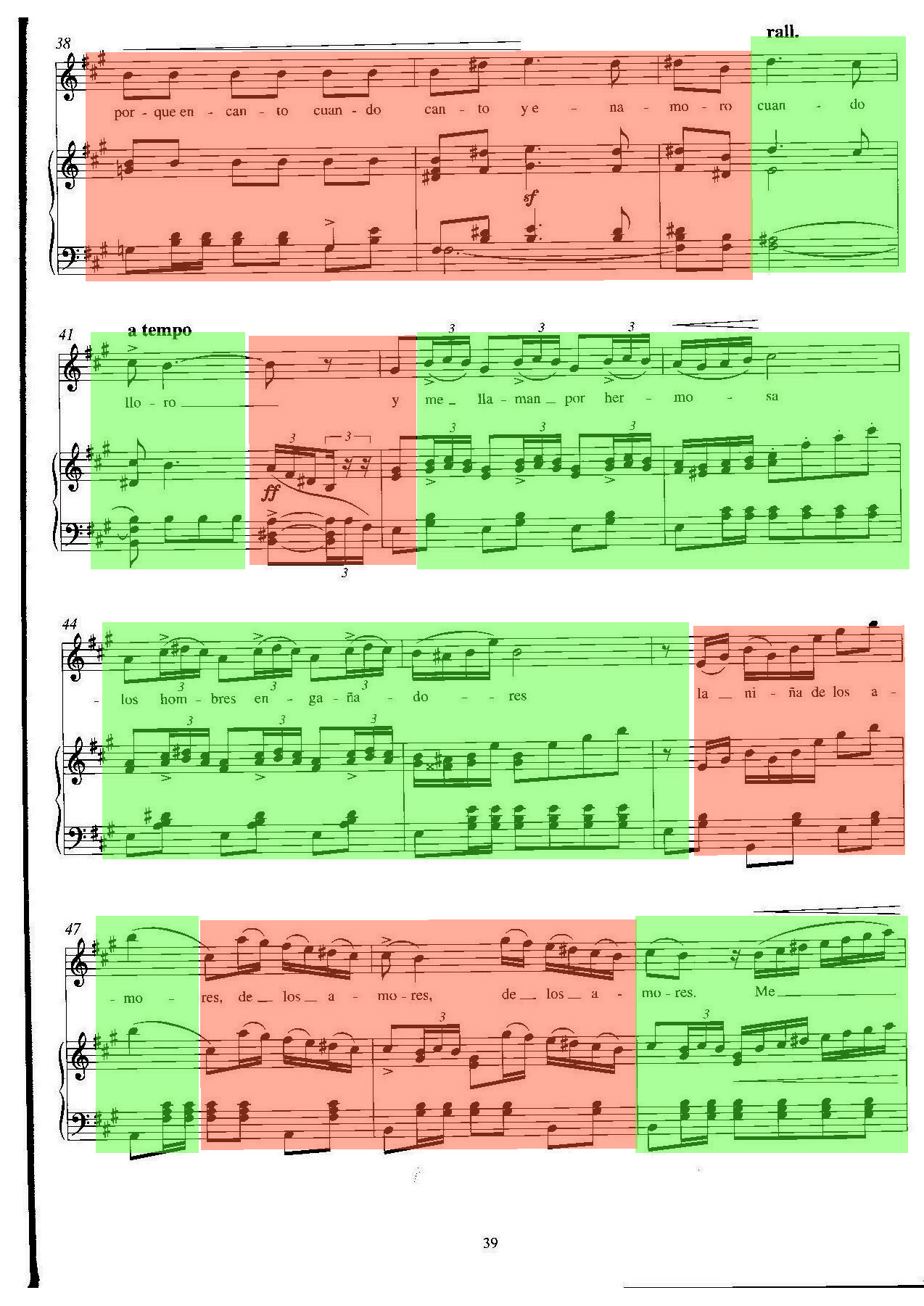
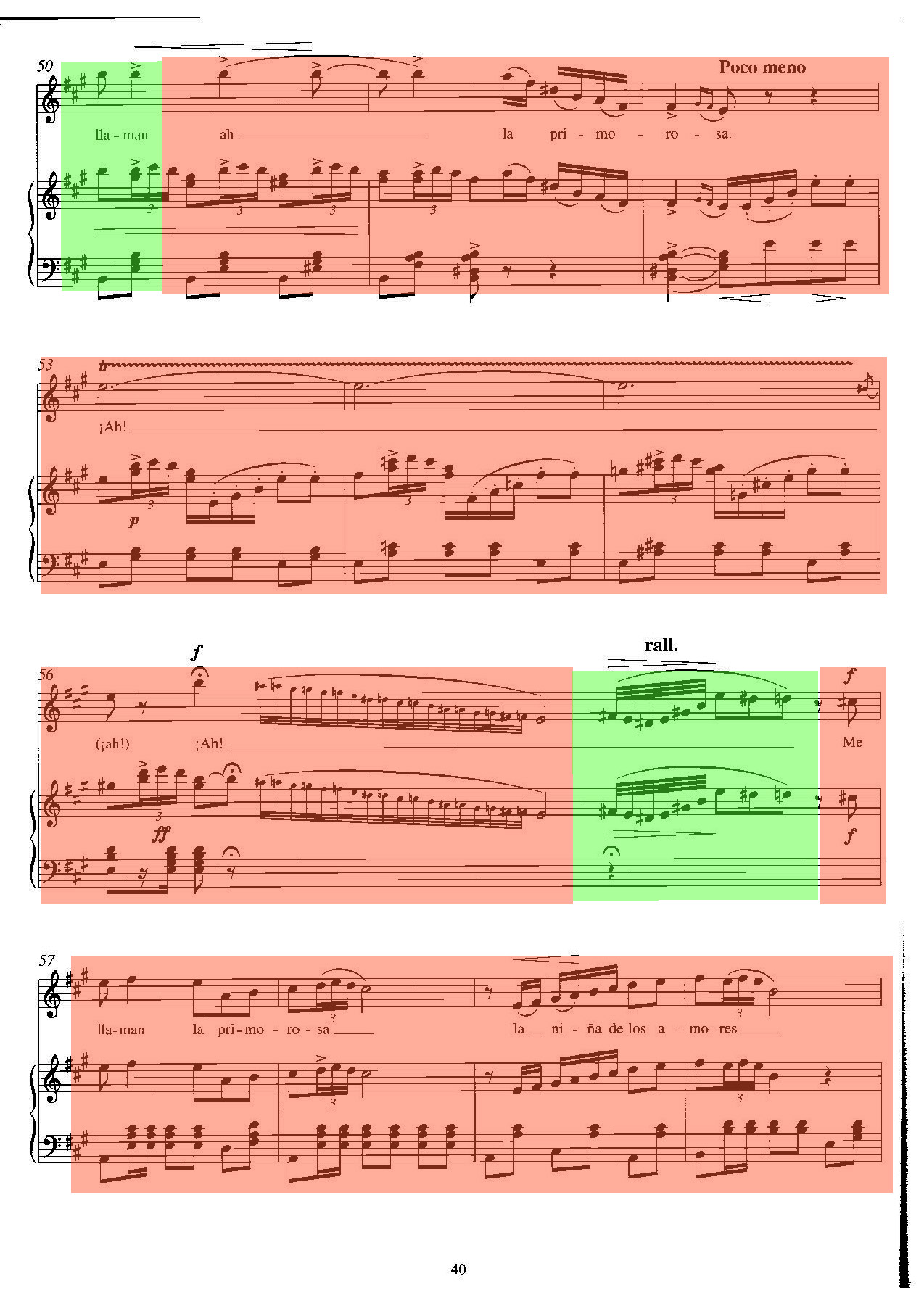
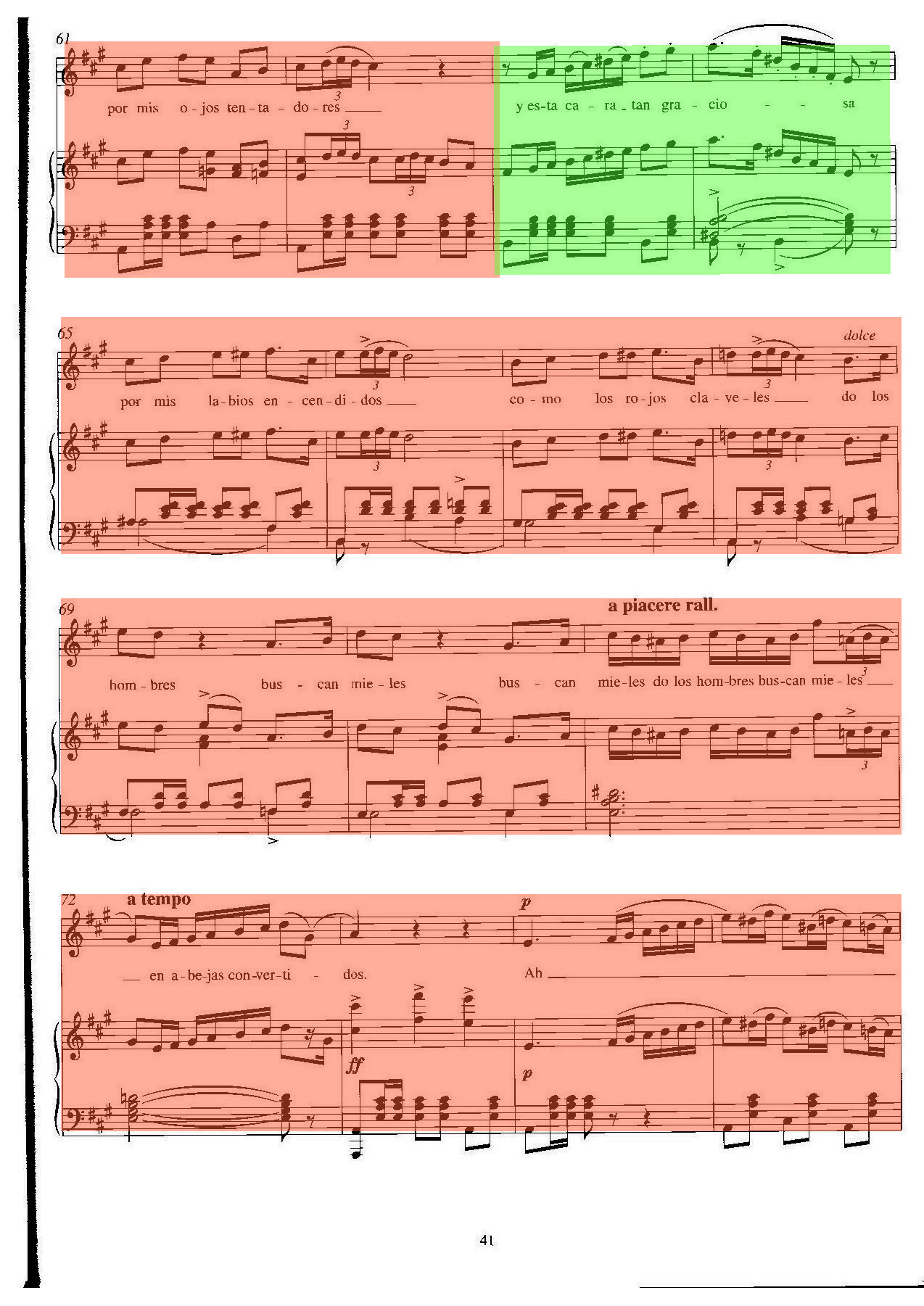
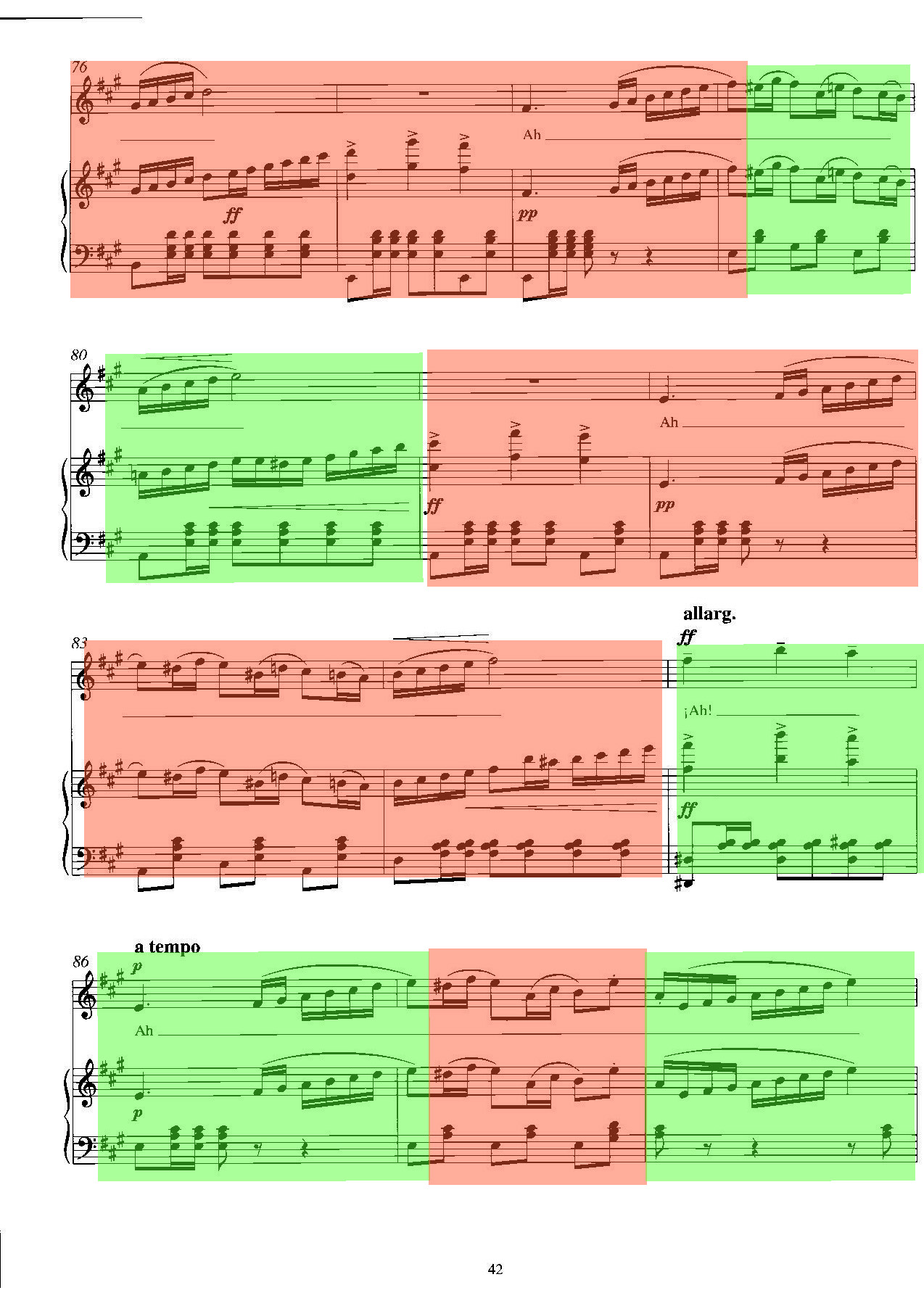
Les Roses d’Ispahan annotated score
Issues that couldn’t be resolved#
Despite our best attempts there were unfortunately some timing issues that couldn’t be resolved in the recording session. Below are tables for each piece detailing these.
Me Llaman la primorosa issues
| Issue # | Location in Audio (Wav) | Issue |
|---|---|---|
| 1 | 00:02.3 | All piano takes had performance errors, this is the best one |
| 2 | 00:11.0 | Piano key click |
| 3 | 00:12.5 | Loud breath |
| 4 | 01:24.3 | Best take, however there’s unfixable note wobble (wide vibrato) |
| 5 | 01:26.2 | Out of time entry |
| 6 | 01:29.7 | Out of time entry |
| 7 | 01:37.3 | Wrong piano note |
| 8 | 01:53.5 | Best vocal take, however piano has performance errors |
| 9 | 02:23.3 | Mouth noise click |
| 10 | 03:20.1 | Slight click in the reverb |
Les Roses d’Ispahan issues
| Issue # | Location in Audio (Wav) | Issue |
|---|---|---|
| 1 | 04:17.8 | Mouth noise click |
| 2 | 05:11.6 | Pedal noise change, followed by mouth noise |
| 3 | 05:56.8 | Can’t get edit to work, therefore wobbly note |
| 4 | 06:17.9 | Very wide vocal vibrato, no good take |
| 5 | 06:25.7 | Breath noise |
| 6 | 06:35.4 | Wobbly note |
Further Editing Details#
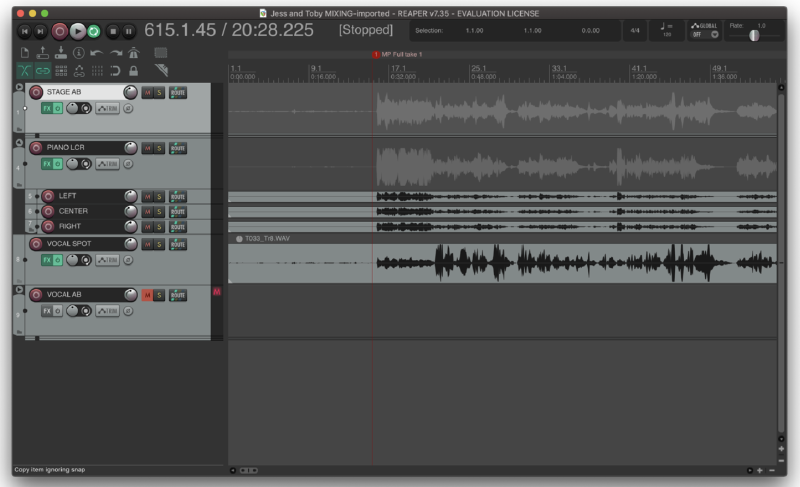
I used two REAPER sessions to edit the recording, first a MIX session for mixing the recordings and adjusting the levels and EQs of individual mics. I then imported this as a sub-project into an EDIT session where the various takes where comped together to fix any performance errors.
Mix Session#
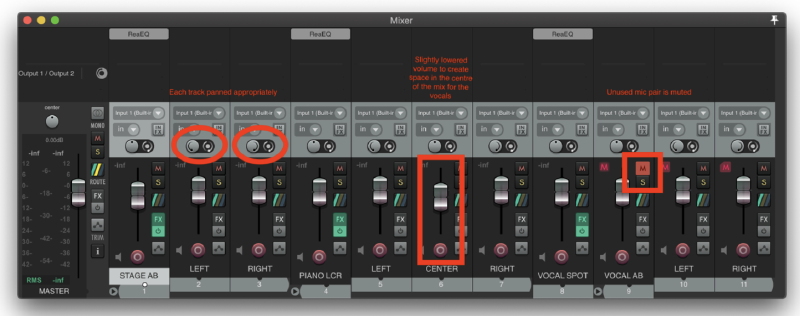
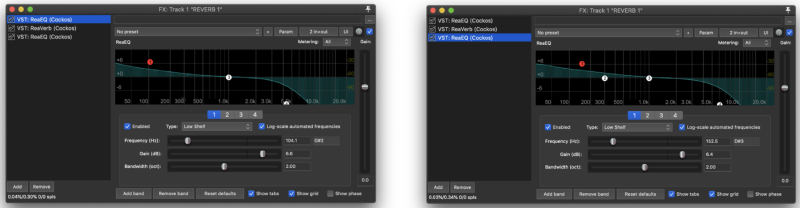
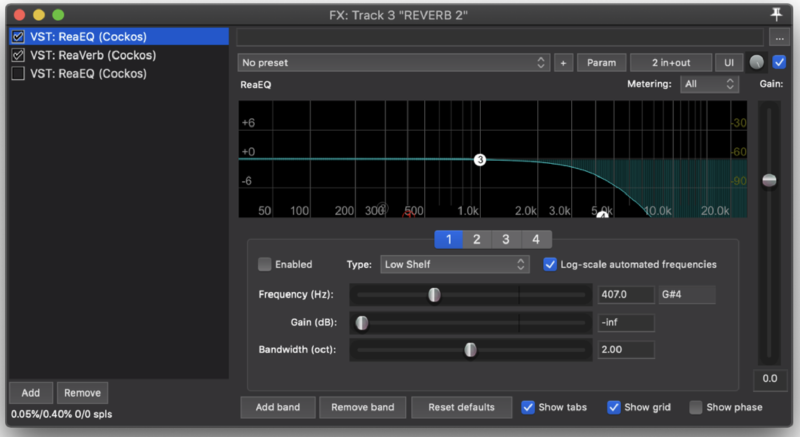
The EQs#
Volume Edits#
Volume Edits
| Edit number | Start time in source |
|---|---|
| 1 | 08:50.893 |
| 2 | 08:54.746 |
| 3 | 19:52.103 |
| 4 | 20:08.931 |
| 5 | 22:39.572 |
| 6 | 23:34.061 |
| 7 | 27:06.439 |
| 8 | 27:58.443 |
| 9 | 28:15.221 |
| 10 | 28:48.485 |
| 11 | 35:15.410 |
| 12 | 36:37.670 |
| 13 | 38:18.701 |
| 14 | 38:25.373 |
| 15 | 39:08.744 |
| 16 | 39:40.876 |
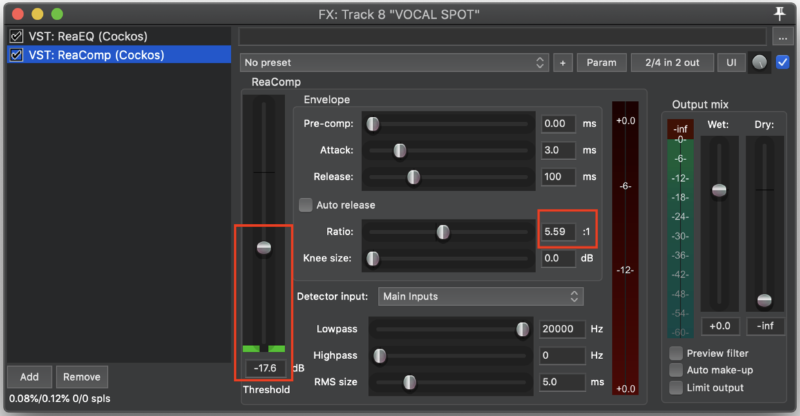
Beginning at 15.16, 33.22 and 38.49 in the MIX session I also periodically lowered the volume of the PIANO LCR slightly, to better balance it with the voice.
Edit Session#
Importing the MIX session into the EDIT session as a sub-project renders the MIX session
down to a single track, which allows much easier editing and keeping track of takes. I make sure to set a unique colour for each different take, so that it was easy to tell where edits are made and which takes I used.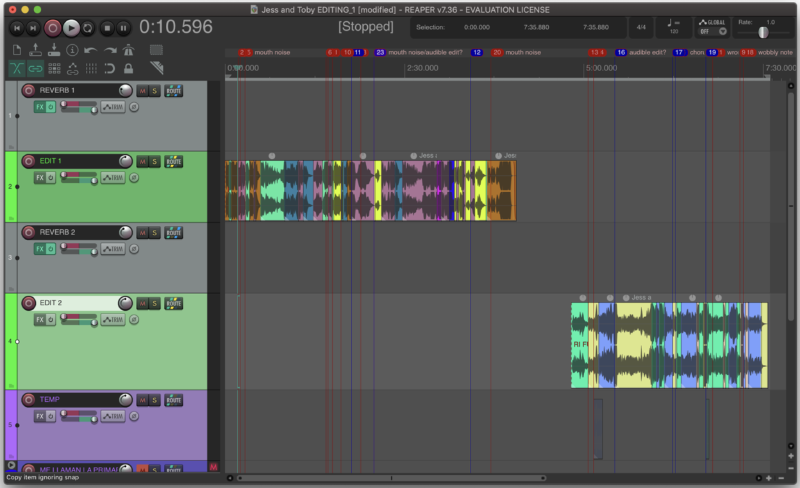
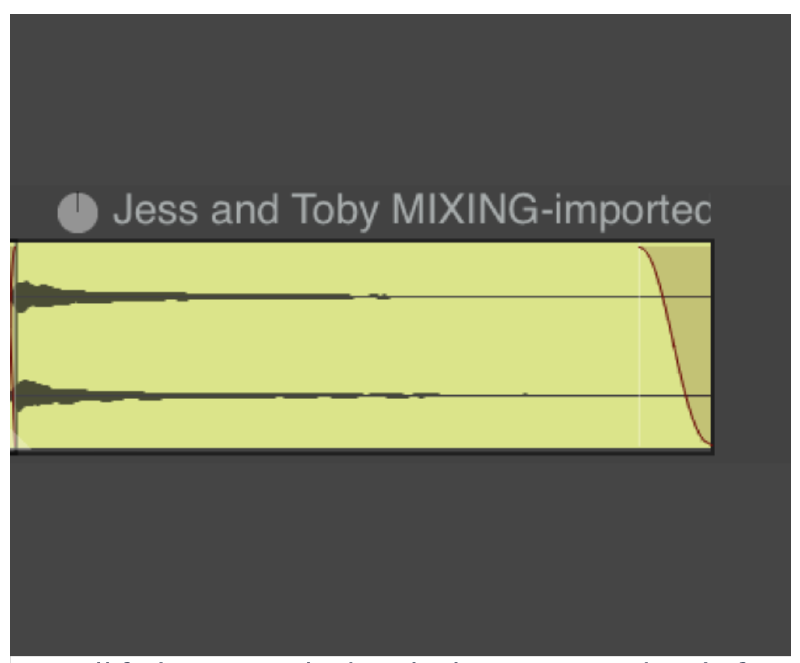
The splices for the comp happen right before the beginning of a note, with very small crossfades to mask the edit point. A big challenge with this edit was working around large vocal phrases, and piano pedal changes that carry over the end of a phrase.
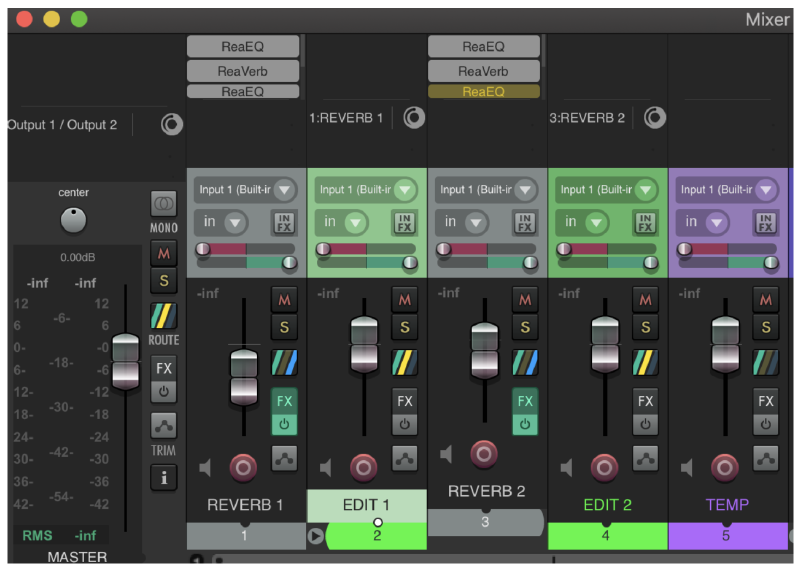
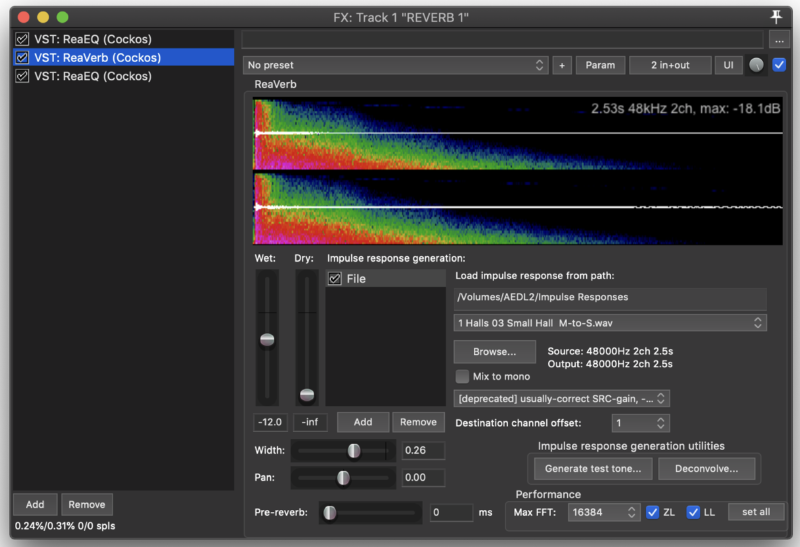
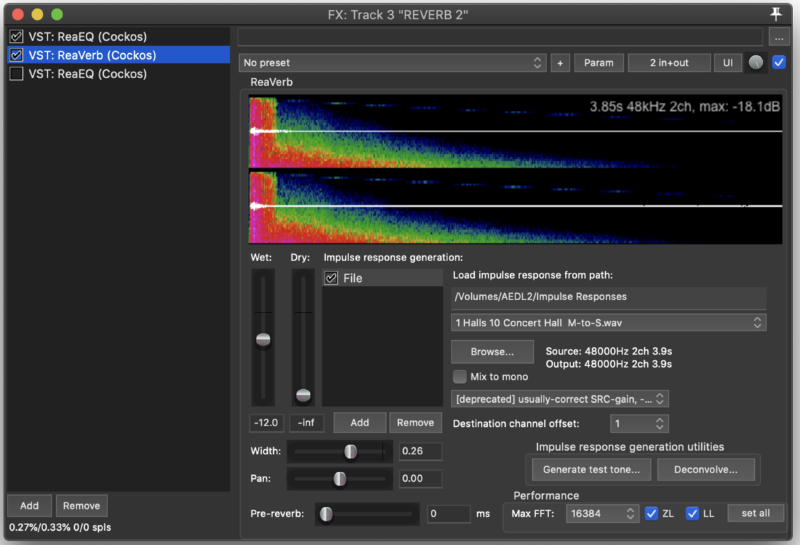
The volume levels were left at their default values, because all the mixing had been done in the MIX session. The levels of the REVERB buses are adjusted respectively to mix the artificial reverb with the natural hall reverb.
Rendering#
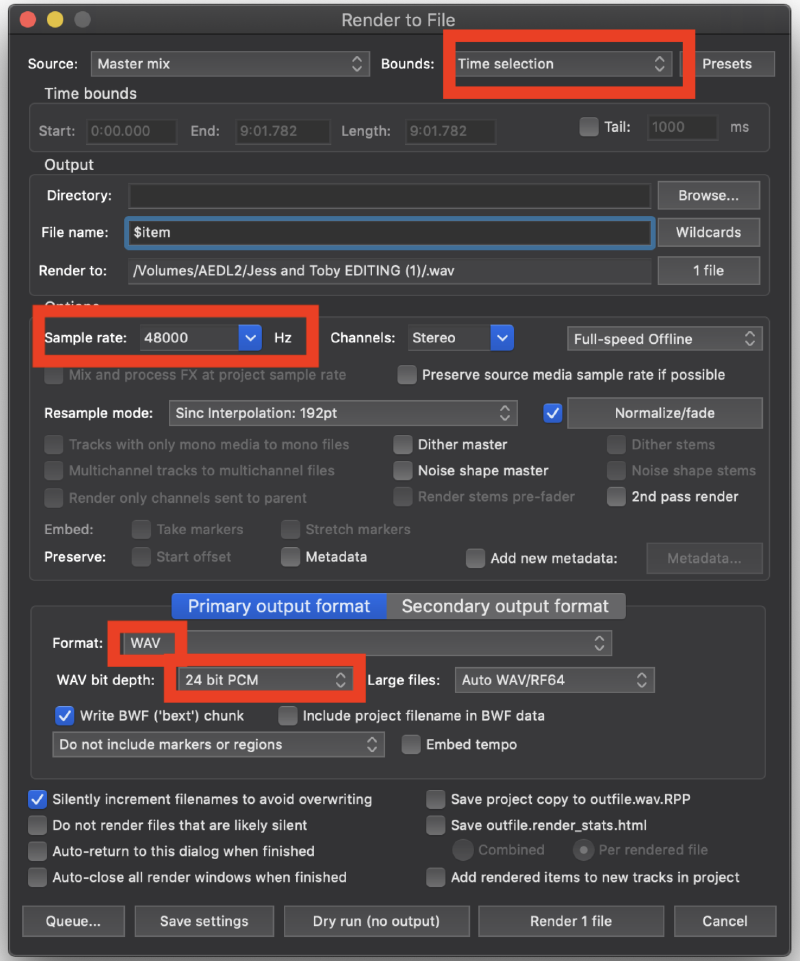
Finally, I rendered the piece to a single WAV file, using Time selection bounds, 48khz Sample rate and 24bit PCM bit depth.